
Artificial intelligence development continued at a rapid pace this week, with major announcements affecting enterprise adoption, healthcare, AI search, infrastructure, and access to advanced models.
The most important trend was not simply the release of new technology. Companies are increasingly focused on turning artificial intelligence into practical systems that can support businesses, professionals, and everyday users.
Here are five AI developments that mattered this week and what they could mean for the wider industry.

OpenAI launches a global Partner Network
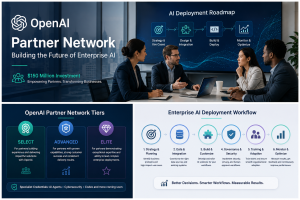
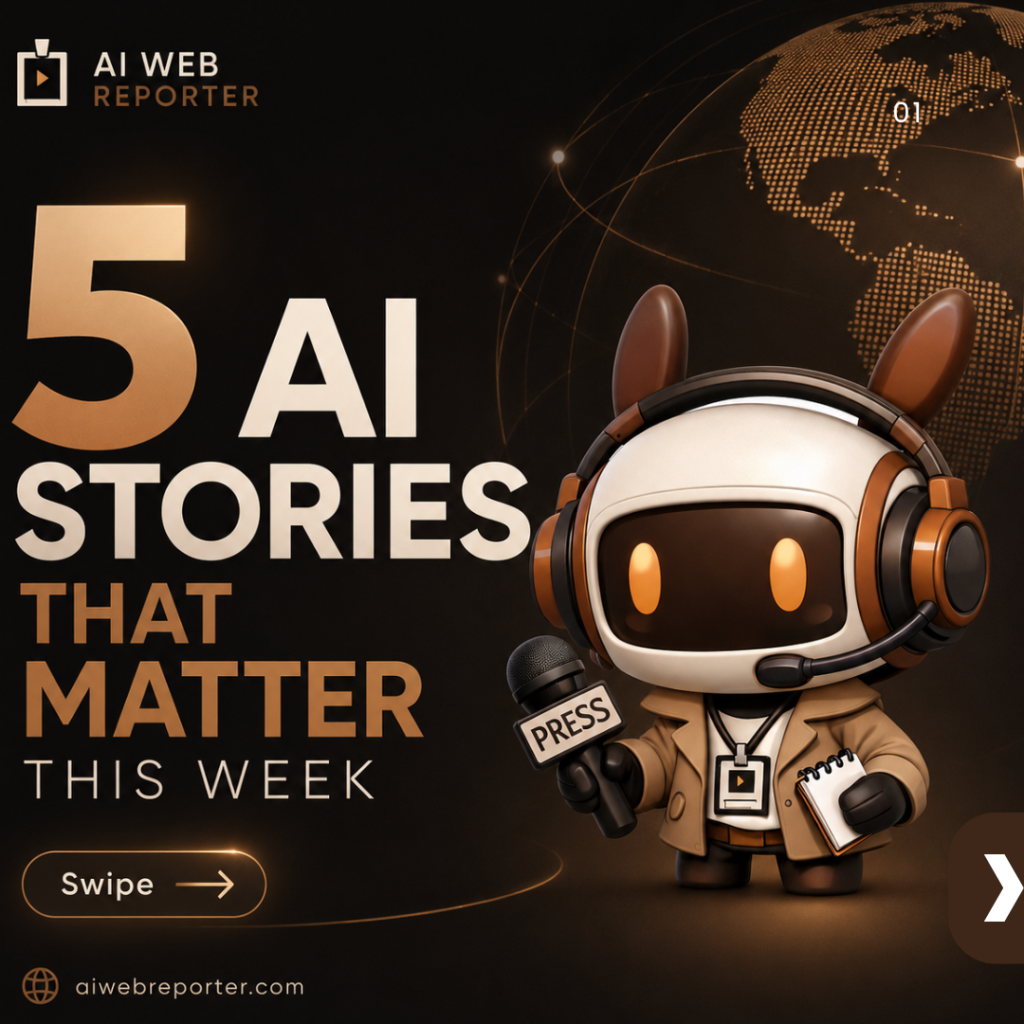
OpenAI announced a new Partner Network designed to help companies adopt and deploy artificial intelligence more effectively.
The company is investing 150 million dollars in the partner ecosystem and aims to support organizations that provide AI strategy, system integration, workflow redesign, and business transformation services.
The program includes Select, Advanced, and Elite partner levels. OpenAI also plans to introduce specialist credentials in areas such as AI agents, cybersecurity, and Codex.
This announcement shows that access to powerful models is no longer the only challenge. Many businesses still need support connecting AI to their data, software, employees, and operating processes.
The next stage of enterprise AI will depend heavily on implementation partners that can deliver secure systems and measurable results.
OpenAI expands health intelligence in ChatGPT
OpenAI also announced improvements related to health intelligence in ChatGPT.
Artificial intelligence can help people understand complicated information, prepare questions for a medical appointment, and organize general health information.
However, AI-generated health information should not be treated as a replacement for qualified medical advice. Users still need to verify important information and consult healthcare professionals when making medical decisions.
The development highlights a wider challenge for consumer AI. Systems must provide useful information while clearly communicating limitations, uncertainty, and safety considerations.
As AI becomes more common in health-related searches, trust and responsible design will become increasingly important.
Anthropic suspends access to advanced Claude models
Anthropic temporarily suspended access to Claude Fable 5 and Claude Mythos 5 following a United States government directive.
The situation demonstrates how government policy and export controls can affect access to advanced artificial intelligence systems.
For developers and businesses, this creates an important operational risk. A company may build a product or workflow around a specific AI model, but changes in policy, availability, or licensing can disrupt that system.
Organizations should avoid depending completely on one model provider. Strong AI architecture should include backup options, clear data policies, and a plan for switching providers when necessary.
The story also shows that AI competition is no longer limited to model quality. Regulation, national security, and international access are becoming equally important.

NVIDIA and SK hynix expand the AI infrastructure race
NVIDIA and SK hynix announced a multiyear partnership focused on developing advanced memory for AI infrastructure.
Modern AI systems require large amounts of computing power, but processors alone are not enough. High-performance memory is essential for moving data quickly during model training and inference.
As AI models become larger and more complex, demand for specialised memory and data-centre infrastructure is expected to increase.
This partnership reflects the growing competition to build what companies describe as AI factories. These are large computing environments designed to train, run, and improve artificial intelligence systems at scale.
The future of AI will depend not only on software, but also on chips, memory, energy, networking, and data-centre capacity.
Google strengthens AI Mode in Search
Google is continuing to expand AI-powered search through its AI Mode experience.
The company announced that Gemini 3.5 Flash would become the default model for AI Mode globally. The update is intended to improve reasoning, coding, and agent-style tasks inside search.
Traditional search usually gives users a list of links. AI search attempts to create a direct answer by combining information from multiple sources.
This may save users time, but it also creates challenges for publishers and content creators. Websites may receive fewer clicks if users get the answer directly inside the search page.
Publishers will need to create clear, original, and authoritative content that AI systems can understand and reference.
What these developments tell us
These five stories reveal a major shift in the artificial intelligence industry.
OpenAI is investing in business deployment.
Health-related AI is becoming more useful but requires stronger safety controls.
Anthropic’s model restrictions show how regulation can affect access.
NVIDIA and SK hynix are investing in the hardware required to support future AI systems.
Google is changing how people discover information online.
The common theme is that AI is moving beyond isolated tools and demonstrations. It is becoming part of business operations, healthcare information, search, security policy, and global infrastructure.
The companies that succeed will not simply use the newest model. They will build systems that are reliable, secure, measurable, and useful in real-world situations.
Which of these AI developments do you believe will have the biggest long-term impact?
Official Sources
- OpenAI Partner Network
- OpenAI Health Intelligence
- Anthropic Official Statement
- NVIDIA Newsroom
- Google AI Search